
Inside the universe of Armando Babani
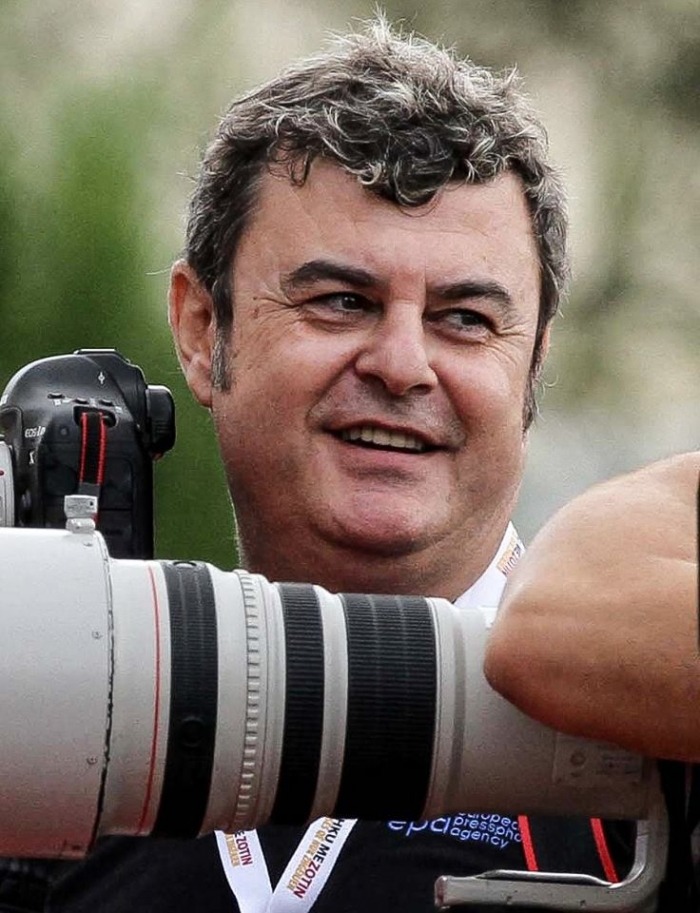
Interview with the photographer ARMANDO BABANI
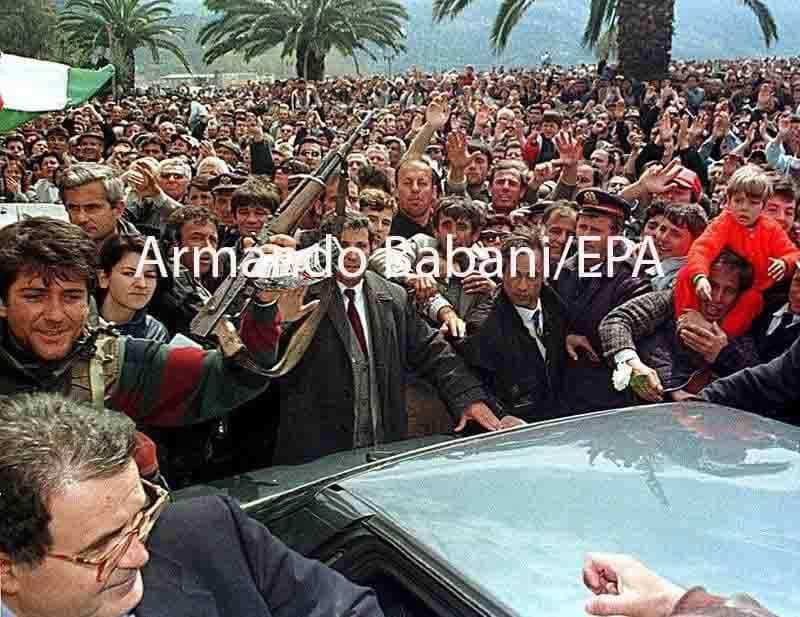
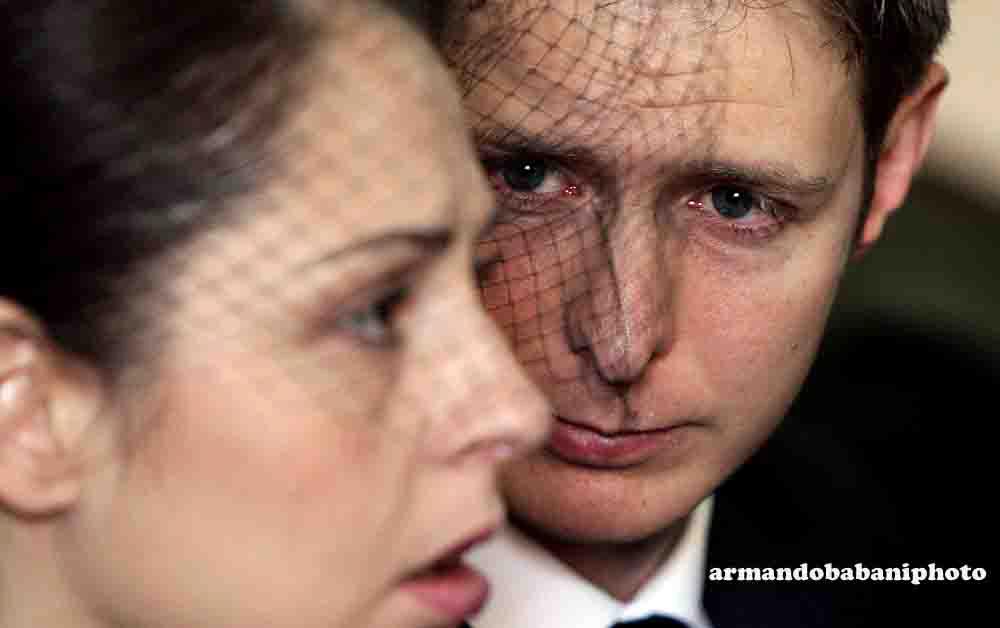
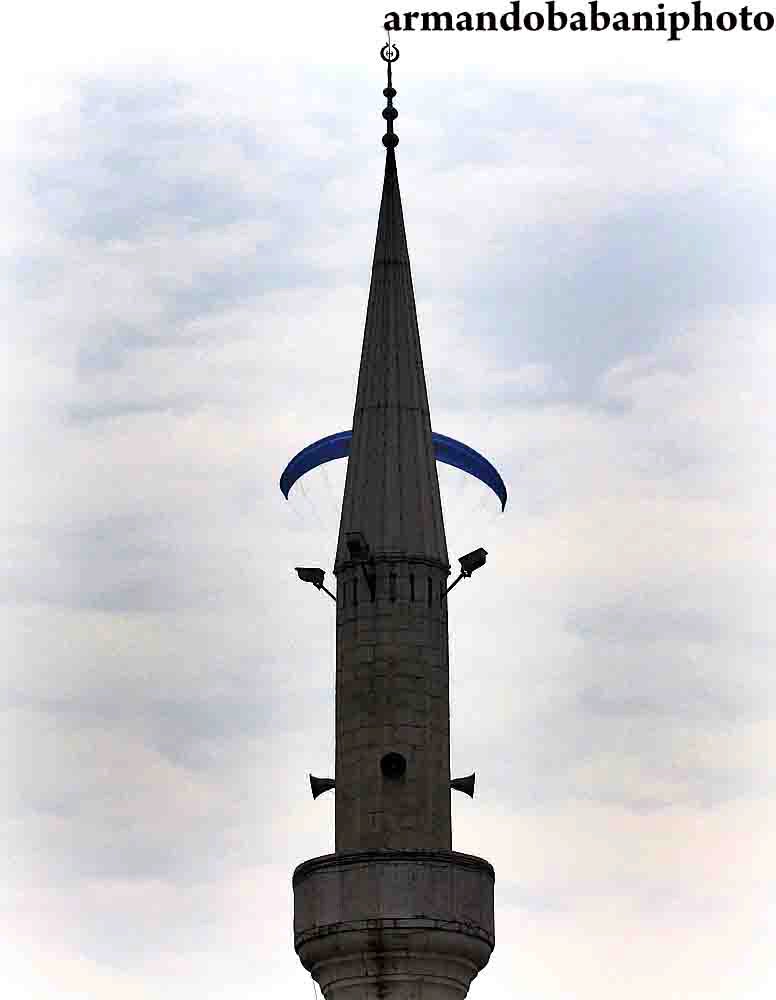
A child “imprisoned” by a flood, the opposition leader hooded before a plate of pasta, a weary and disillusioned Schumacher before a race, the bust of the former dictator falling, thousands of ropes hung for desperate people who abandon our country… This face too belongs to the photography of Armando Babani, or more precisely there are millions of faces that make up our history of recent years.
All of us grew up with his images; to all of us he has shown every truth of his own which, over the years, cyclically, has always coincided with historical truth. Polyhedric and singular, an EPA photojournalist published everywhere, Armando continues a body of work begun over 30 years ago: “To photograph the world as he sees it, without constructing the stories”.
More than an interview, this is a conversation in which, informally, Armando expresses his thanks for our interest and his support for EJAlbum and Fotopasion magazine. He even recalls his youth, when “despite the pressure of the regime, we young photographers exchanged with one another everything we could, and where even cameras and lenses were often borrowed”.
”. I ask him about the role photographers have in society and he answers me with his favorite phrase, borrowed from a colleague: “We are the eye of God, not His arm!”.
Again I address him, this time to learn how it happened that he became a photographer. He begins to tell me from his childhood, “I was only 8 years old when my Father, who at the time worked at the Pioneers’ Palace, kept taking me along with him. The master of the photography circle, Agim Verzivolli, kept me by his side and would ‘order’ me: take this ‘water’ (the solutions)… digital had not yet appeared…; put in this paper (the photographic paper), take this camera and point it there… etc. This, I can say, was the A of what would later become my Profession and my greatest Hobby.”
Then the conversation continues as he tells me of a difficult moment… He says to me: “Once, in 1993 in Pogradec, together with a Scottish journalist, we go to see and witness the people who were attacking and looting all the warehouses of the city; we arrive at the moment when the alcoholic-drinks warehouse had just been opened, and one can imagine how drunk they were… One of them approaches me and puts a pistol to my head, saying: Spy… and loads it… Luckily the journalist with me says something in English and then the crowd tells him: ‘Leave him, leave him, they’re foreigners!’ That guy raises the pistol into the air and fires! I think my state of mind after that moment is easily understandable, also because the journalist who was with me did not lose his sense of humor, telling me ‘but what if that guy had mixed up the order, drunk as he was, fired into your head and then raised his hand up?’…”
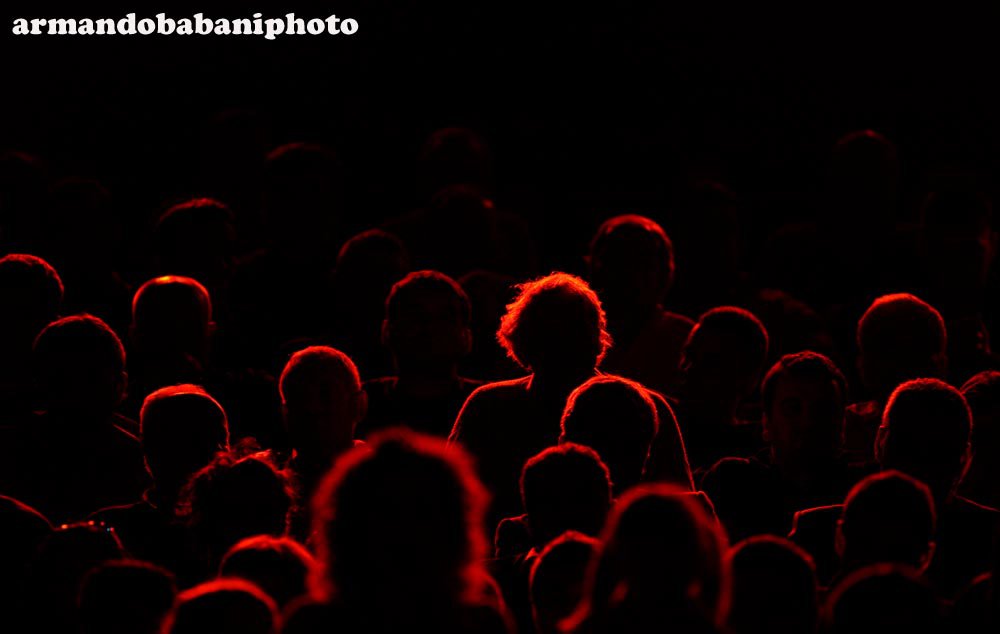
Again I ask him; I want to know the importance the environment has in his photos. And he answers me: “Albania is a country full of deep contrasts, and as such it demands a great deal of work from a photographer, but in the same way it offers many aspects to capture.” He then tells me of an instance about his editor’s impressions of a set of photographs. “He looked carefully at the photos and in the end told me: You have a golden country, and not only from a photographic point of view, but which, to your misfortune, has been governed by copper!.”
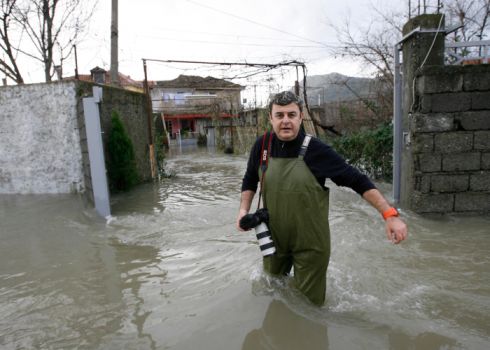
I use an expression for photojournalists like Armando; I call them “true” photographers, and I openly ask him to tell me, in his view, the reason why today in Albania there are so few true photographers. He answers me bluntly, in his Tirana accent “Because today everyone takes shortcuts and few take their work seriously. This is a profession and, like all the others, it demands dedication and respect for ethics and for one’s being; it also demands that you always measure yourself against yourself.”.
It seemed pointless to me to continue any further, also because a deep universe like Armando Babani cannot be discovered with words. For this reason I invite you all to discover it through his everyday shots.
Text & Interview: Julinda Mbrica
Published in the online magazine Fotopasion.
See also:
Intervistë me Flavio Bandiera
Bashkëbisedim me fotografin Bujar Veselaj
# 2010, Album Epoca, Albume Fotografike, Armando Babani, Artikull, EJAlbum Albania, Fotografë Shqiptarë, Intervista, Julinda Mbrica, Revista