
A conversation with photographer Bujar Veselaj
A Conversation with the Photographer
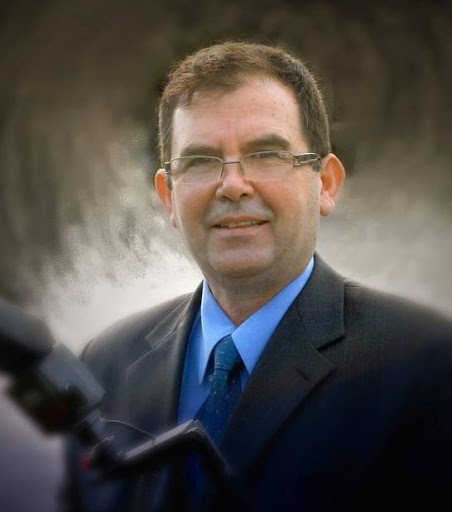
"What good is great depth of field if it isn't matched by the right depth of feeling" — said Eugene Smith. I often think of this saying. I think of it every time I have in front of me a photograph that moves me. And I think everyone has the right to know how such a photograph is born, or how it is created. That's why, whenever I have the chance, I ask the photographers I know these very things. I think they should show us their paths so that we may follow them. That's why the interviews are taken. In Fotopasion's case, this is the second interview. After Armando Babani in the previous issue, this time my pen knocked on a door across the ocean. A photographer who needs no lengthy introduction, because the name alone is enough: BUJAR VESELI (VESELAJ)
- What is photography for the Veselaj family, and how did Bujar come to this path? It may seem a banal question, but I believe our readers would be interested in a personal presentation of your career and your background as a photographer, as well as an anecdote or two related to it.
Photography for the (Veseli) Veselaj family is a continuity. It began with my father, Refik Veseli, who at a very young age started the beautiful profession of photographer. Thanks to my father, this profession entered the blood of my mother, myself, and my brother Fatmir. My father passed on this passion to many of his relatives, friends and acquaintances as well. Now let me tell you a bit about myself. As I said, I come from a family of photographers, and as a result, from childhood I grew up with the terms of the photography field. I remember that even as a small child I very much wanted to stay by my father's side and watch how he coloured black-and-white photos with oil paints. Later I too started colouring like him. At that time colour photography still didn't exist. Seeing my great desire to learn, for my 15th birthday my father gave me a Taxona camera, on the aluminium part of which he had engraved my name.
- What is the relationship between art and photography in your work?
As I said above, in our family most conversations revolved around photography. As a child I wanted to, and did, paint, and I reproduced illustrated stories. I graduated from the Jordan Misja Art Lyceum in painting, but photography had a stronger influence on me, so I devoted myself to Photography with great passion. So I worked as a photographer at the Archaeological Museum in Tirana, at Ylli magazine, and at the Higher Institute of Agriculture. After the arrival of democracy, my father, my brother and I opened the photography studio FOTO STUDIO SPORTI, VESELI. In the archive of every institution I've worked at, there are hundreds of negatives I'm the author of. You ask me what the relationship is between art and photography. For me, photography is an art in its own right. Just as painting is art, so photography is art too. I know some may not like it, and some may disagree with me, but this is my opinion, and no one will change it.
- Your favourite subject in photography?
I can say that in general I like all fields of photography. I'm less drawn to press photography. It's not that I don't like it, but it's more demanding. I adore portraiture, artistic photos that I take with pleasure no matter how tired I am at that moment.
- How much has your work changed with digital photography? I mean also the necessary updating demanded of photographers today, as well as the change in their work, not only technically but also in relation to themselves. So, Bujar and technology?
Bujar and technology; just as I love photography fiercely, I say without fear that I love digital technology with the same intensity. As a curiosity, and I say this with full confidence, I was the first in Albania to introduce digital technology. (Should the occasion arise another time, I'll tell you how I got into digital as well.)
For me, anyone who still works with film photography is someone afraid to adapt to the new technology (even though it's no longer new now). I'd make a crude comparison: it's like washing clothes by hand on a stone slab, the way our grandmothers did, versus washing them in a washing machine. Digital photography is a technology that no one knows where it will end up.
- Emigration and Bujar? Emigration and photography? Our readers are curious about these relationships, as well as the stories hidden behind them.
Emigration was, for me, another school when it comes to the art of photography. It has helped me a great deal, including the workplace where I still work today. A professional photo lab, NATURAL COLOR LAB. It's a lab that prints only for photographers from several US states, and since it prints for photographers, it's natural that I come across, and see, plenty of truly artistic photos. Here there's a completely different worldview compared to Albania. Back home we worked to keep reinvesting the profit in equipment, everyone trying to have the newest machine. Here it's very rare to see a photography studio with a printing lab. All the photographers send their photos over the internet to labs like the one I work at. Once the order is completed, it's sent to the client by mail. (Let's not discuss the reliability of the postal service.) There are even some studios now that have started sending in orders by email on behalf of their clients; in that case, it's sent by mail directly to the final client, without passing through the studios themselves at all. And something else: a lot of photography exhibitions happen here, especially through collaboration among several photographers who are very close to one another. The opposite happens in Albania, where resentment and jealousy prevail…
- We have a new audience, especially amateur photographers. It's only natural to ask you for advice for those who want to start out, or to grow, in this profession. But I'd also like to ask you for some advice on what they should photograph and how they should do it today in Albania.
My advice, both for the amateur photographer and for the professional, is that the internet is a school that teaches those who are willing. First of all, whoever wants to become a photographer must love this profession. Only if the passion is strong will you feel the fruits of that love.
- To close, I'd like to know, I'm very curious to know, a dream of yours locked away in a drawer — something you haven't done yet, or that you very much wish to do in the not-too-distant future, naturally in relation to photography?
My dream is, and will remain, a modern photography studio.
Interviewed by Julinda Mbrica. EJAlbum PR
Published in the online magazine Fotopasion.
See also:
Interview with Flavio Bandiera
Inside Armando Babani's universe